One of my goals as a classroom teacher was to make learning more visible for my students. I wanted them to be in control of their own learning, so I always tried to give a clear picture of our learning goals.
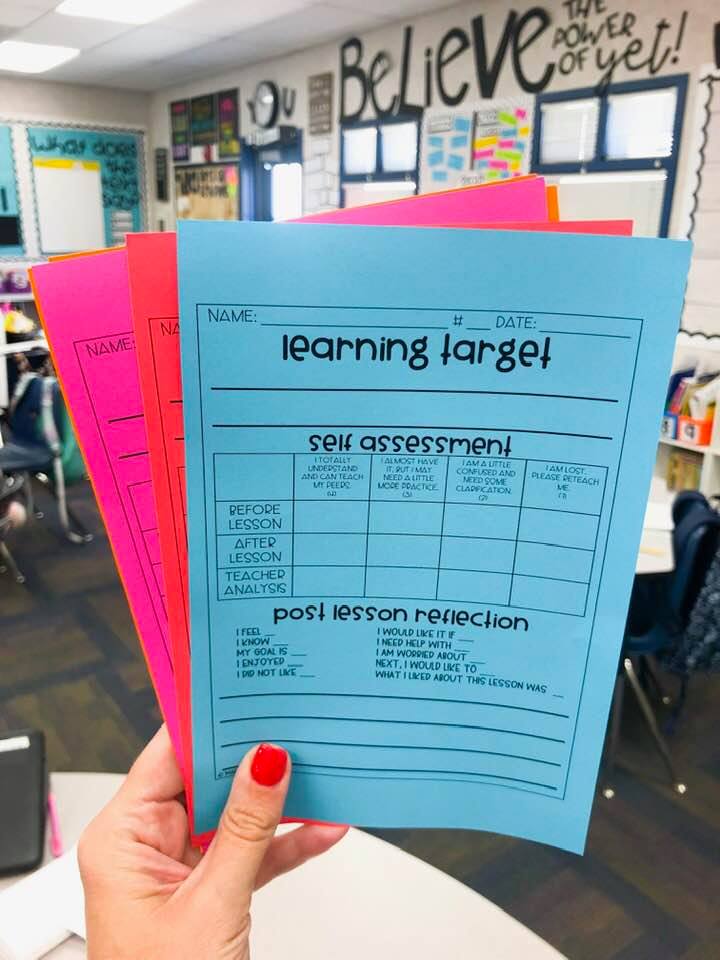
One way I fostered students’ ability to connect with the learning goal, was through self-assessment tickets.
According to John Hattie’s Visible Learning research, self-reflection (or self-assessment) yields a .75 effect size. This means almost two years of growth in a year’s time.
I created these self-assessment tickets to help my students self-reflect and self-regulate while they were learning.
I called them “Learning Target Tickets” with my students.
They’re pretty simple to use and can be used for any lesson, in any content area.
This is how I implemented them in my classroom.
Starting the Lesson
I used them at the start of the lesson after I communicated the learning goal to my students. After starting off with my “hook,” or attention grabber, I stated the objective. Then, I asked students to self-assess and check their level of understanding in the “before lesson” column of the ticket.
After checking the box, they’d set the ticket off to the side while the lesson continued.
Ending the Lesson
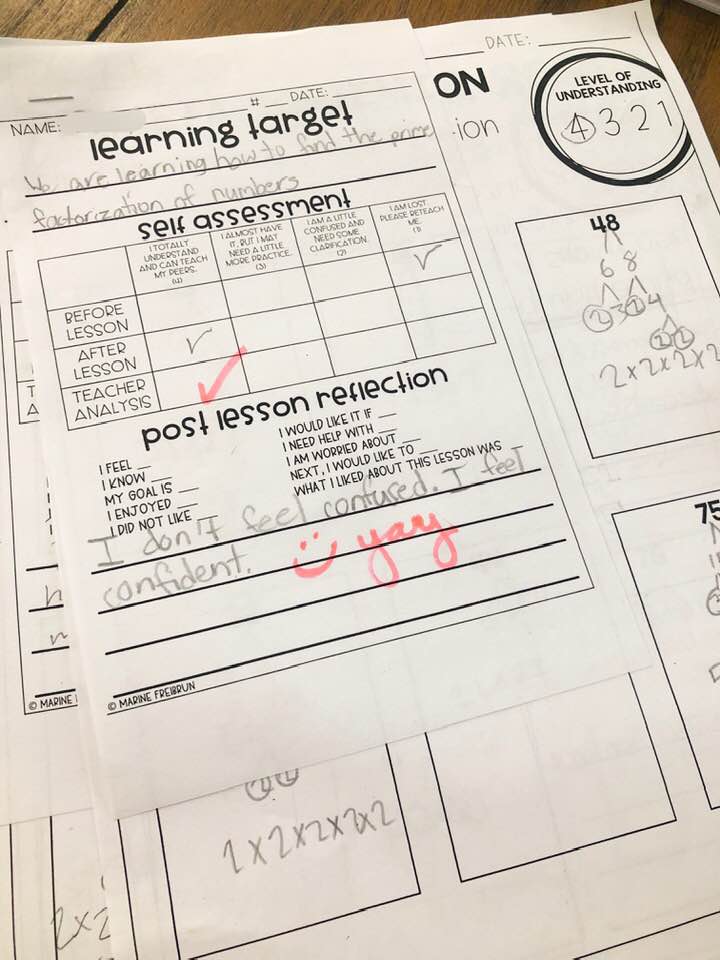
At the end of the lesson, while I was asking students closure questions, I’d ask them to rate their level of understanding in the “after lesson” column.
They were also required to complete a short self-reflection using one (or more) of the sentence frames. If it made sense for a particular lesson, I’d also ask students one last “checking for understanding” question that they’d complete on the ticket, too.
A few things to consider…
While I’m always hopeful that students’ self-assessments will improve over the course of the lesson, I’m also realistic in that students need multiple points of practice when learning new skills.
I made sure to explain this to my students.
It’s okay to still feel confused or unsure. I would remind my students that it was my goal to help them grow in their learning, and it’s normal for it to take time.
I also would always have a few students who felt they were at a level 4 understanding when learning a new skill, but it wasn’t an accurate reflection.
It takes some time to help students understand that being honest in their self-reflection helps them and the teacher understand their learning progression.
After building a community of trust in the classroom over the first few weeks of the school year, students are more comfortable being honest in their self-reflection.
When Starting Out
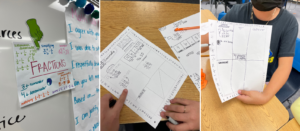
When I first started implementing these tickets, I started small with math lessons. My students knew we always used a ticket with each lesson. I also had them staple their tickets to their independent practice.
This enabled me to see their self-assessment and their independent work side by side.
After using them for math, I started using them for grammar skills. I wanted to start with ELA standards that were more concrete and procedural. As I got more confident with using the tickets, I used them for abstract ELA concepts and Science and Social Studies lessons.
One More Thing!
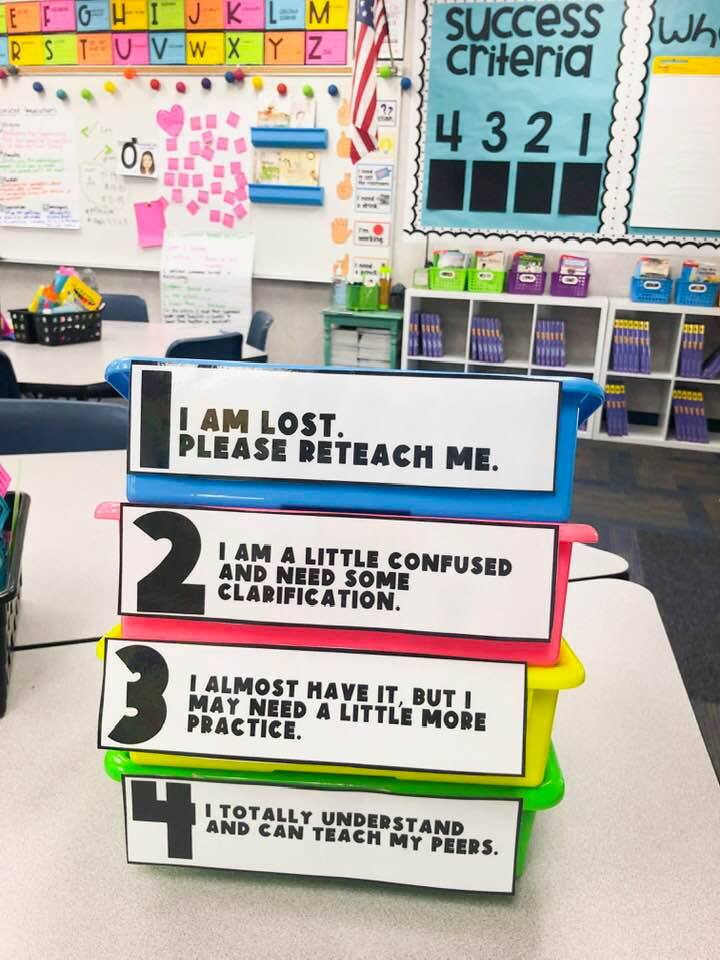
In addition to using the tickets with my students throughout lessons, I also used a self-assessment turn-in bin system.
Students turned in their work into one of these bins depending on their level of understanding.
It does take a lot of positive culture building, as well as trust, to help students feel comfortable when turning in their work to these bins.
After the first few weeks of school, students knew the system and felt confident when turning in their work.
It also made grading a lot easier, as well as pulling students back for small group reteach or extension.